

Plastic Bag Recycling Machine: Complete Industrial Solution for Turning Waste Bags into High-Quality Pellets
2026-08-11

BoReTech’s Plastic Bag Recycling Machine is designed for one purpose: to transform post-consumer and post-industrial plastic bags into clean, stable, high-value PE/PP recycled pellets at industrial scale. From PP raffia bags ,PE industrial film and Heavy-Duty Packaging Film to agricultural film, this flexible plastic recycling system delivers reliable performance for recycling plants, waste-management companies, and film processors seeking consistent, ready-to-use recycled raw materials. Built on decades of engineering experience in PET,PP,PE washing, BoReTech’s solution provides high washing efficiency, low energy consumption, stable output, and excellent pellet consistency, even when processing lightweight or highly contaminated flexible films.
1.Why Plastic Bag Recycling Requires a Specialized Machine
Plastic bags, films are thin, soft, and prone to contamination. Compared with rigid plastics, they require dedicated equipment that can maintain stable feeding, intensive washing to remove the impurities, controlled moisture, and accurate pelletizing.
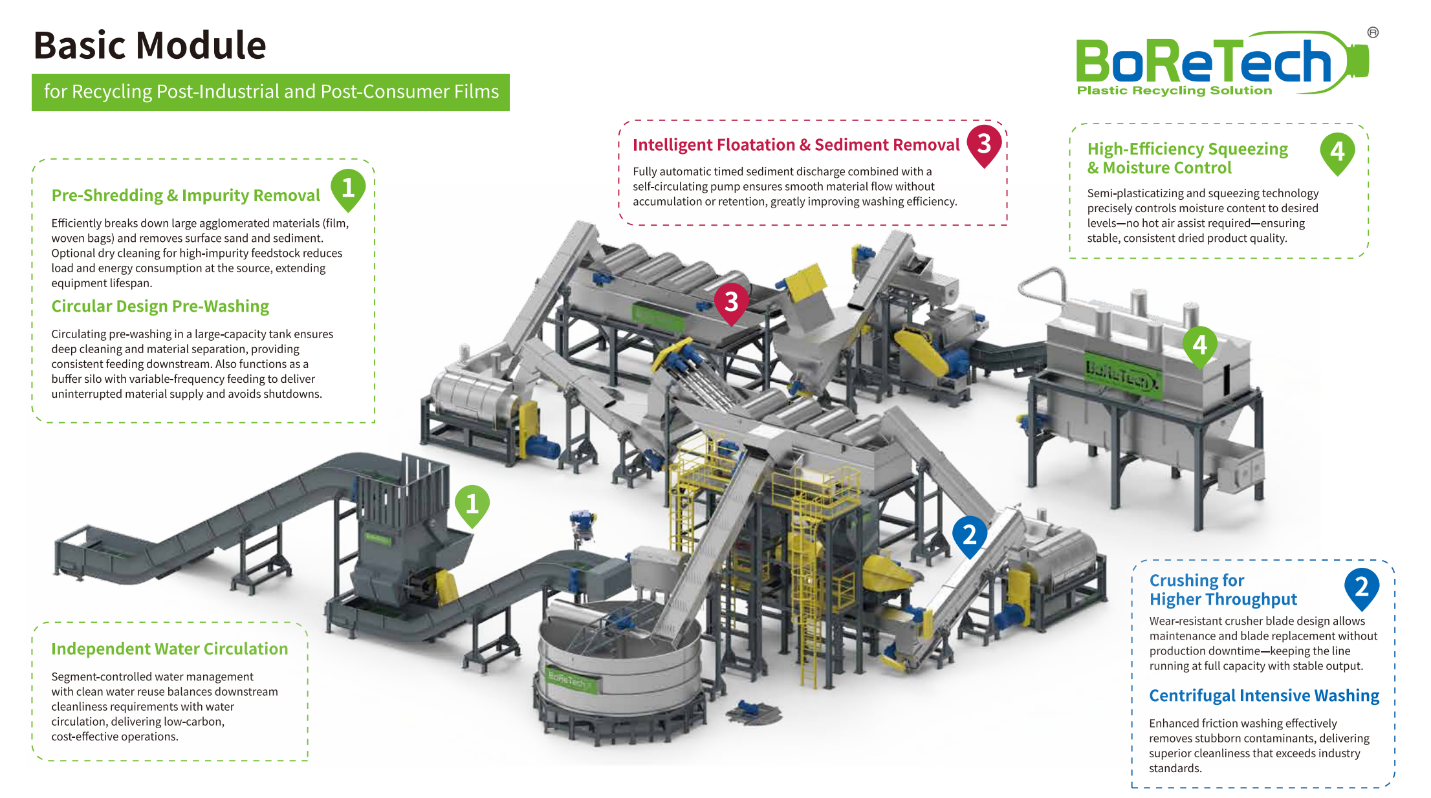
A standard Plastic Bag Recycling Machine includes:
- Pre-Shredding and Impurity Removalto removes surface sand and sediment
- Circular Design pre-washing for dirt, dust, and residues, variable-frequency feeding to delivers uninterrupted material supply and avoids shutdowns
- Centrifugal Intensive Washing enhanced friction washing effectively removes stubborn contaminants, delivering superior cleanliness that exceeds industry standards.
- High-Efficiency Squeezing & Moisture Control —Semi-plasticatizing and squeezing technology precisely controls moisture content to desired levels—no hot air assist required—ensuring stable, consistent dried product quality.
- Pelletizing equipment tailored for PE/PP film characteristics
Optional Module:
- Rapid Washing Module —— Designed for woven bags, heavy-duty packing films, and similar materials—effectively removes ink, oil, grease, adhesives, and surface contaminants without damaging the material itself. Prevents ink smearing during washing and eliminates the risk of black specks in pelletizing or defects in recycled films.
- Dry Cleaning Module——Effectively removes high levels of solid impurities (e.g., from agricultural mulch films) without using water.
Integrated Film Washing & Pelletizing Solution
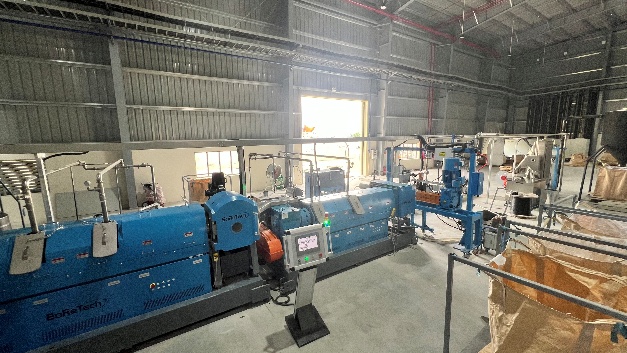
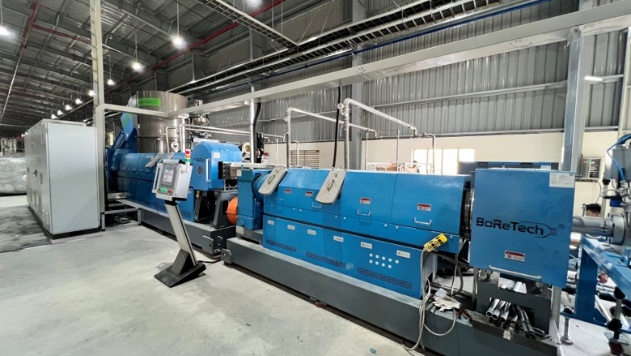
The washing process delivers high-quality material for pelletizing. A specially designed extruder screw enhances compression, conveying, and plasticization, thus improving pellet quality. Digital temperature control with efficient cooling ensures stable melting. Low-noise, hardened gear reducers for continuous high-speed performance, reliability, and durability.
BoReTech’s line integrates all functions into a continuous, energy-efficient system, designed to meet the rising global demand for rPE and rPP.
2.Material Types Suitable for Recycling
BoReTech’s recycling line is optimized for the most common polyolefin films in flexible packaging.
- Greenhouse Film Waste
- Mulch Film Waste
- Consumer Film
- Heavy-Duty Packaging Film
- PP Raffia Bags
Materials That Require Sorting
PVC, PS, PVA, multilayer composites, and metalized films must be separated to maintain stable pellet MFI, color, and purity.
BoReTech provides precision component separation solutions for different types of films and mixed plastics including PE, PP, PVC, and PET, removing heterogeneous waste materials and accurately purifying clean polymers such as PE and PP. By controlling feedstock purity at the source, we substantially enhance the processing efficiency and finished product quality in subsequent pyrolysis (oil refining) and pelletizing stages, eliminate impurity interference, and ensure that the recycled outputs meet all required standards and regulatory compliance.
Material Matrix – Recommended for Film & Bag Recycling Lines
Upstream and downstream supply chains for PP material
| Comparison Dimension | General Grade Recycled PP Pellets | Recycled PP Fiber | Economic Grade Recycled PP Pellets |
|---|---|---|---|
| Raw Material Source | Mixed waste PP woven bags (mainly chemical and building materials packaging) | Medium and high purity cleaned PP woven bag fragments | Slightly contaminated PP woven bags (mainly grain and feed packaging) |
| Cleaning Process Requirements | Basic cleaning with normal temperature clear water, remove large impurities and sediment | Standard cleaning with normal temperature clear water, need deinking and degumming to ensure stable melt index | Simple cleaning with normal temperature clear water, only remove surface soil, dust and a small amount of organic impurities |
| Product Form | Granular, uniform particle size | Filamentous / short fiber shape, stable strength | Granular, low purity, allow a small amount of fine impurities |
| Key Performance Indicators | Moderate melt index, good moldability | Breaking strength ≥3cN/dtex, good weather resistance | Large fluctuation of melt index, average mechanical properties |
| Main Application Scenarios | Injection molding (plastic pallets, turnover boxes, trash cans), blow molding (chemical barrels, hollow containers) | Non-woven fabrics, geotextiles, textile fabrics, filling fibers | Agricultural products (seedling pots, plastic film supports), low-end buffer packaging (product inner liners) |
| Target Customers | Injection molding product factories, blow molding container factories, logistics packaging enterprises | Chemical fiber spinning factories, non-woven fabric manufacturers, infrastructure material suppliers | Small agricultural product factories, rural waste recycling cooperatives, low-end packaging factories |
| Commercial Value Characteristics | Large market capacity, stable sales channel; raw material cost is 30%-40% lower than new material | Higher added value than pellets; can replace part of virgin fiber, significant cost advantage | Lowest investment threshold, wide source of recycled raw materials; fast cash realization, suitable for small workshops |
| Recycling Yield | 65%-75% | 60%-70% (loss in spinning process) | 75%-85% (less cleaning loss) |
Upstream and downstream supply chains for PE material
| Value Tier | Specific Applications | Material Requirements | Core Process | Market Share |
|---|---|---|---|---|
| High-Value Reuse | Agricultural drip irrigation tapes, recycled (thickened) mulch films, inner layer of greenhouse films | LDPE/LLDPE, purity ≥98%, impurities < 0.5% | Hot melt extrusion + stretch forming | 35%-40% |
| Mid-Value Plasticization | Plastic pipes (PE water supply pipes/corrugated pipes), packaging films/bags, injection molded parts (trash cans/trays) | LDPE/HDPE, purity ≥95%, impurities < 1% | Pelletizing + extrusion/injection molding | 40%-45% |
| Low-Value Infrastructure | Geomembranes/impermeable membranes, manhole covers, curb stone fillers | PE/PP composite, purity ≥90%, impurities < 2% | Mixed pelletizing + pressing/extrusion | 15%-20% |
| Special Applications | Degradable film masterbatches (with degradants added), 3D printing filaments (after modification) | LDPE + degradable masterbatch, purity ≥97% | Modified pelletizing + customized processing | <5% |
3.How Material Properties Affect the Recycling Process
Film recyclers care about one thing: stable, consistent pellets.To achieve this, several material factors must be controlled:
- Polyolefins (PE/PP) → produce high-quality, stable recycled pellets
- Higher contamination → requires pre-sorting, Pre-washing and more intensive friction washing
- Film thickness → affects shredding efficiency and feeding stability
- Moisture level → directly impacts pelletizing and extrusion
BoReTech’s system is engineered to maintain stable processing regardless of bag thickness, dirt load, or film elasticity.
4. Industrial Plastic Bag Recycling Process (Step-by-Step)
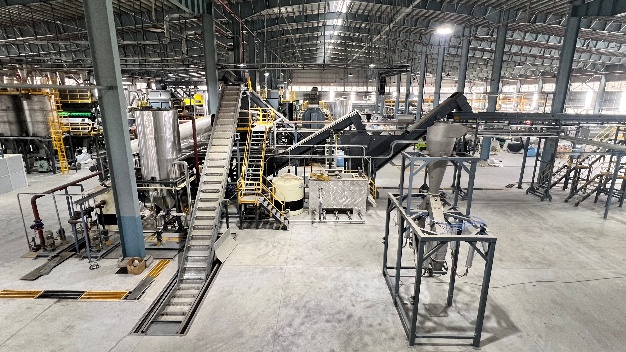
BoReTech’s Plastic Bag Recycling Machine operates through a fully integrated, multi-stage system engineered for efficiency and output stability.
Pre-Shredding & Impurity Removal
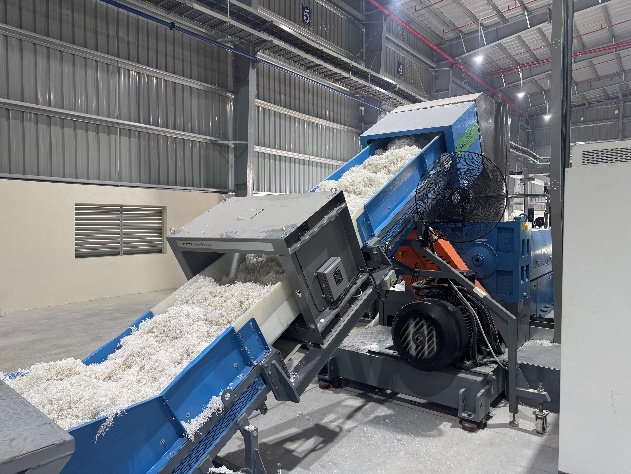
Efficiently breaks down large agglomerated materials (film, woven bags) and removes surface sand and sediment. Optional dry cleaning for high-impurity feedstock reduces load and energy consumption at the source, extending equipment lifespan.
Circular Design Pre-Washing
Circulating pre-washing in a large-capacity tank ensures deep cleaning and material separation, providing consistent feeding downstream. Also functions as a buffer silo with variable-frequency feeding to delivers uninterrupted material supply and avoids shutdowns.
Crushing for Higher Throughput
Wear-resistant crusher blade design allows maintenance and blade replacement without production downtime—keeping the line running at full capacity with stable output.
Centrifugal Intensive Washing
Enhanced friction washing effectively removes stubborn contaminants, delivering superior cleanliness that exceeds industry standards.
Intelligent Floatation & Sediment Removal
Fully automatic timed sediment discharge combined with a self-circulating pump ensures smooth material flow without accumulation or retention, greatly improving washing efficiency.
High-Efficiency Squeezing & Moisture Control
Semi-plasticatizing and squeezing technology precisely controls moisture content to desired levels—no hot air assist required—ensuring stable, consistent dried product quality.
Independent Water Circulation
Segment-controlled water management with clean water reuse balances downstream cleanliness requirements with water circulation, delivering low-carbon, cost-effective operations.
5. Common Challenges in Plastic Bag Recycling — and How BoReTech Solves Them
Challenge 1: Lightweight Film Feeding Instability
BoReTech solution: Anti-bridging design + controlled feeding speed
Challenge 2: Heavy Contamination (soil, ink, food residues)
BoReTech solution: Multi-stage friction washing + float-sink separation
Challenge 3: High Moisture Content
BoReTech solution: Squeeze drying + high-efficiency hot-air system
Challenge 4: Ink and Odor Issues
BoReTech solution: Deep washing + optional deodorization systems
Challenge 5: Pellet Inconsistency
BoReTech solution: Precise melt filtration + stable PE/PP pelletizing technology
6. Machine Highlights & Technical Advantages
BoReTech’s system is built for long-term industrial operation.
Key Features
70%
Dry cleaning ensures effective contaminant removal while significantly reducing wastewater discharge and lowering environmental treatment costs.
99%
The circular design pre-washing equipment maximizes surface cleaning with minimal footprint, removing up to 70% of sand and sediment—reducing crushing load and extending blade life.
3%
While ensuring excellent washing performance, it also achieves water recycling. The advanced water treatment and reuse system, tailored to feedstock conditions and process layout, limits fresh water consumption to below 3% per ton of material output, enabling low-carbon, energy-saving and cost-effective operation.
1.5%
Plasticizing and squeezing, combined with mechanical drying achieve moisture content as low as 1.5%. Integrated washing, pelletizing, and drying processes reduce equipment investment.
Typical Specifications
- Capacity: 1–3 t/h throughput, adaptable to different film types and specific material streams.
- Power consumption: optimized by material density & moisture load
- Water usage: minimized via closed-loop circulation
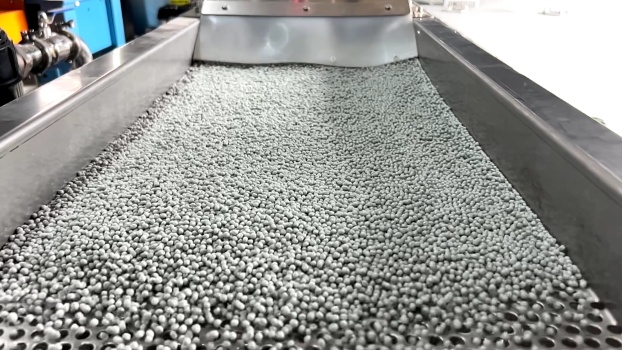
- Output quality: clean, stable rPE / rPP pellets
- Optional Modules for Recycling Different Types of Films: Rapid Washing Module, Dry Cleaning Module
Main Components
- Belt conveyor
- Film shredder / crusher
- Pre-washing Machine
- Crusher
- High-speed friction washer
- Dewatering Machine
- Float-sink tank
- Friction Dewatering Machine
- Squeeze dryer
- Control panel (PLC optional, Scada)
- Pelletizing system
7. Investment, Cost, and ROI Considerations
While costs depend on contamination level, automation, and system capacity, industrial buyers generally evaluate:
Cost Drivers
- Required capacity (1000–3000 kg/hr)
- Pelletizing configuration (single-stage, double-stage)
- Contamination level of incoming waste
- Water/energy consumption strategy
- Layout customization
Typical Benefits & ROI
- Lower raw material cost vs virgin PE/PP
- Fast payback period for high-capacity lines
- Reduced labor due to high automation
- Compliance with sustainability and recycled content requirements
Most buyers recover investment through:
- Savings from rPE/rPP production
- Selling pellets to film blowers
- Reduced landfill and waste-handling fees
8. Frequently Asked Questions (FAQ)
How much does a plastic bag recycling machine cost?
Cost varies based on capacity, contamination level, and automation. Customized quotations are available upon request.
Is recycling plastic bags profitable?
Yes. rPE and rPP pellets are in high demand across flexible packaging and injection molding industries.
Can heavily contaminated or wet plastic bags be recycled?
Yes. Multi-stage washing and squeeze drying are specifically designed for this challenge.
Do you offer customized layouts and configurations?
Yes. BoReTech designs systems based on customer space, material type, capacity targets, and contamination load.
9. Build Your High-Efficiency Plastic Bag Recycling Line with BoReTech
BoReTech provides complete, customizable recycling systems designed for long-term industrial performance. With advanced washing technology, robust engineering, and decades of film recycling experience, our solutions help recyclers turn flexible plastic waste into profitable, high-quality pellets. Request Technical Consultation & Quotation