

Why Is Polypropylene (PP) Recycling So Difficult? From Sorting and Washing to High-Value Recycling
2026-10-16

Polypropylene (PP) recycling is becoming increasingly important as brands, recyclers, and regulators look for ways to increase recycled content and reduce plastic waste. PP is one of the most widely used plastics in the world, found in everything from beverage caps and yogurt cups to woven bags, automotive components, and household products.
.jpg?ld2s9wluya)
Yet despite its widespread use, polypropylene recycling remains challenging. Large quantities of post-consumer PP waste still end up in landfills or incinerators because collection systems, sorting infrastructure, and economically viable recycling capacity have not developed as quickly as PP consumption.
The good news is that PP can be effectively recycled. With the right PP recycling process, washing technology, sorting equipment, and pelletizing system, recyclers can turn contaminated PP waste into high-quality recycled polypropylene (rPP) for a wide range of applications.
This guide explains why PP is difficult to recycle, how the PP recycling process works, what recycled PP can be used for, and how advanced PP recycling technology can improve both product quality and recycling economics.
What Is Polypropylene (PP) Plastic?
Polypropylene, commonly known as PP, is a thermoplastic polymer produced from propylene through chain-growth polymerization. It belongs to the polyolefin family together with polyethylene (PE).
PP is widely used because it combines low density, chemical resistance, heat resistance, fatigue resistance, and good processability.
Key Properties of PP
- High heat resistance: PP has a relatively high melting point compared with many common commercial plastics, making it suitable for hot-fill food packaging, microwave containers, and automotive components exposed to engine heat.
- Chemical resistance: PP offers good resistance to many acids, alkalis, and chemicals, which is why it is widely used in detergent containers and medical equipment.
- Fatigue resistance: PP can be repeatedly bent and folded without breaking. This property makes it ideal for living hinges, such as flip-top closures on ketchup bottles that can be opened and closed thousands of times.
- Lightweight and moisture resistance: PP is one of the lightest commercial plastics and has excellent resistance to moisture absorption, helping extend the shelf life of packaged foods.
Common Applications Across Industries
- Packaging: Yogurt cups, margarine tubs, beverage caps, prescription bottles, and takeaway containers.
- Consumer products: Reusable food storage containers, luggage, toys, and household appliances.
- Textiles: Woven bags, carpets, ropes, and geotextiles.
- Automotive: Bumpers, battery housings, and interior panels.
- Medical: Syringes, laboratory equipment, and sterile packaging.
How to Identify PP Plastic
PP carries the Resin Identification Code #5 (RIC #5). Products made from PP typically display a triangular recycling symbol with the number 5 inside.
At a recycling facility, PP can also be identified by its physical properties. Virgin or relatively pure PP generally has a density below that of water and therefore floats in water, and it often has a slightly waxy feel.
Can Polypropylene Be Recycled?
Yes, polypropylene can be recycled.
As a thermoplastic, PP can be melted and reprocessed multiple times. The most common approach is mechanical PP recycling, in which waste PP is sorted, shredded or granulated, washed, dried, extruded, and pelletized.
However, the fact that PP is technically recyclable does not mean that every PP waste stream can be recycled economically.
This distinction is one of the biggest issues facing the global PP recycling industry.
PET and HDPE have benefited from decades of investment in collection systems, sorting infrastructure, washing plants, and established end markets. PP recycling infrastructure is comparatively less developed, particularly for difficult post-consumer waste streams.
As a result, large amounts of PP waste remain outside the recycling system.
Why Is PP So Difficult to Recycle?
There are three major challenges in polypropylene recycling:
- Polymer degradation
- Sorting and contamination
- Recycling costs and food-contact requirements
Understanding these challenges is essential when designing an efficient PP recycling line.
1. Polymer Degradation
Unlike aluminum or glass, which can be recycled repeatedly without the same type of polymer degradation, PP can undergo thermal, mechanical, and oxidative degradation during repeated melting and processing.
These changes can affect molecular weight, melt flow rate (MFR), and certain mechanical properties. As the number of recycling cycles increases, the performance of recycled PP can gradually decline unless appropriate stabilization measures are applied.
2. Sorting and Contamination
Material Recovery Facilities (MRFs) face two major challenges when processing PP.
The first is black plastic. Carbon-black pigments used to color takeaway containers and other black plastic products absorb near-infrared (NIR) light, which is commonly used by optical sorting systems to identify different types of plastic. As a result, conventional NIR sorting equipment may fail to recognize black PP, causing it to be diverted to the residual waste stream.
The second is mixed-material contamination. PET beverage bottles, for example, commonly use PP caps. If these materials are not adequately separated before extrusion, residual PP and other incompatible polymers can enter the PET stream, potentially affecting downstream processing stability and final product quality.
3. Recycling Costs and Food-Contact Requirements
Producing food-contact-grade recycled PP requires effective removal of potential contaminants, volatile substances, and odors while meeting applicable regulatory requirements.
The technologies required for this level of decontamination can be capital-intensive, while operating costs can also be significant. Producing high-quality rPP involves additional costs for collection, sorting, washing, decontamination, and quality control. The price gap between rPP and virgin PP varies depending on feedstock availability, energy costs, market demand, and regulatory conditions.
How Does the PP Recycling Process Work?
Despite these challenges, industrial-scale PP recycling is achievable with the right process and equipment.
At industrial scale, PP recycling generally follows three main pathways: mechanical recycling, chemical recycling, and solvent-based recycling. Mechanical recycling uses different combinations of pre-treatment, sorting, washing, and pelletizing processes. Chemical recycling primarily relies on pyrolysis, which breaks polymer chains down into hydrocarbon feedstocks. Solvent-based recycling, meanwhile, uses solvents to selectively dissolve and purify the polymer, removing colorants, odors, and additives.
Mechanical Recycling
Mechanical recycling is currently the dominant approach globally and generally involves the following steps:
- Collection: Post-consumer PP is collected through curbside recycling programs, deposit-return systems, or industrial recycling collection points.
- Sorting and washing: NIR optical sorters, color sorters, and increasingly AI-assisted robotic systems separate #5 PP from other resins in mixed waste streams.
- Size reduction: Sorted PP is processed through industrial granulators or shredders to reduce it into uniform flakes.
- Float-sink separation: PP has a density below 1 g/cm³ and therefore floats in water. In a separation tank, heavier contaminants such as PET sink and can be removed.
- Washing and drying: Hot washing and friction washing remove food residues, adhesives, and surface contaminants, followed by centrifugal drying.
- Extrusion and pelletizing: Clean flakes are melted in an extruder. Additives may be introduced to restore or improve polymer properties, and the molten material is pelletized into uniform granules for further processing and sale.
Chemical Recycling and Solvent-Based Recycling
In addition to mechanical recycling, there are currently two major complementary pathways for PP recycling. The first is chemical recycling, primarily through pyrolysis, which breaks down PP polymer chains into hydrocarbon products that can be further refined and converted into chemical feedstocks for polymer production. The second is solvent-based recycling, which uses solvents under controlled conditions to selectively dissolve PP and remove colorants, odors, and additives, followed by polymer recovery through precipitation or solvent evaporation.
Both pathways can, to some extent, overcome the limitations of mechanical recycling associated with feedstock color and contamination history. They can therefore serve as complementary options for applications requiring higher purity or, where the relevant regulatory and process requirements are met, for food-contact applications that may be difficult to achieve through conventional mechanical recycling alone.
What Can Recycled Polypropylene Be Used For?
Depending on feedstock composition, contamination levels, and changes in material properties during recycling, rPP is most commonly used in applications that do not require food-contact certification or high optical clarity.
- Home and garden: Park benches, composite decking, flower pots, and heavy-duty storage containers.
- Automotive: Battery housings, mudguards, and interior components.
- Industrial: Transport crates, paint buckets, and industrial strapping.
- Consumer and industrial products: Brooms, brushes, and fibers for industrial textiles.
High-quality rPP produced through advanced washing and decontamination technologies can be used in higher-value applications, including food-related packaging and automotive-grade products. With the appropriate technology and regulatory validation, it can ultimately be used in food-contact packaging.
Is Your Facility Processing PP Caps or Trays?
The challenges described above—including contamination, material loss, and separation of mixed materials—are precisely the issues that BoReTech’s PP recycling system is designed to address.
For detailed technical information, see:
BoReTech PP/PE Bottle Cap Recycling Solution | PP/PET Tray Washing System
BoReTech’s Advanced PP Recycling Solutions
Overcoming contamination, embrittlement, and mixed-material challenges in PP recycling requires purpose-built equipment—not simply adapting a bottle recycling line for PP processing.
BoReTech designs specialized recycling systems tailored to the unique processing requirements of polypropylene.
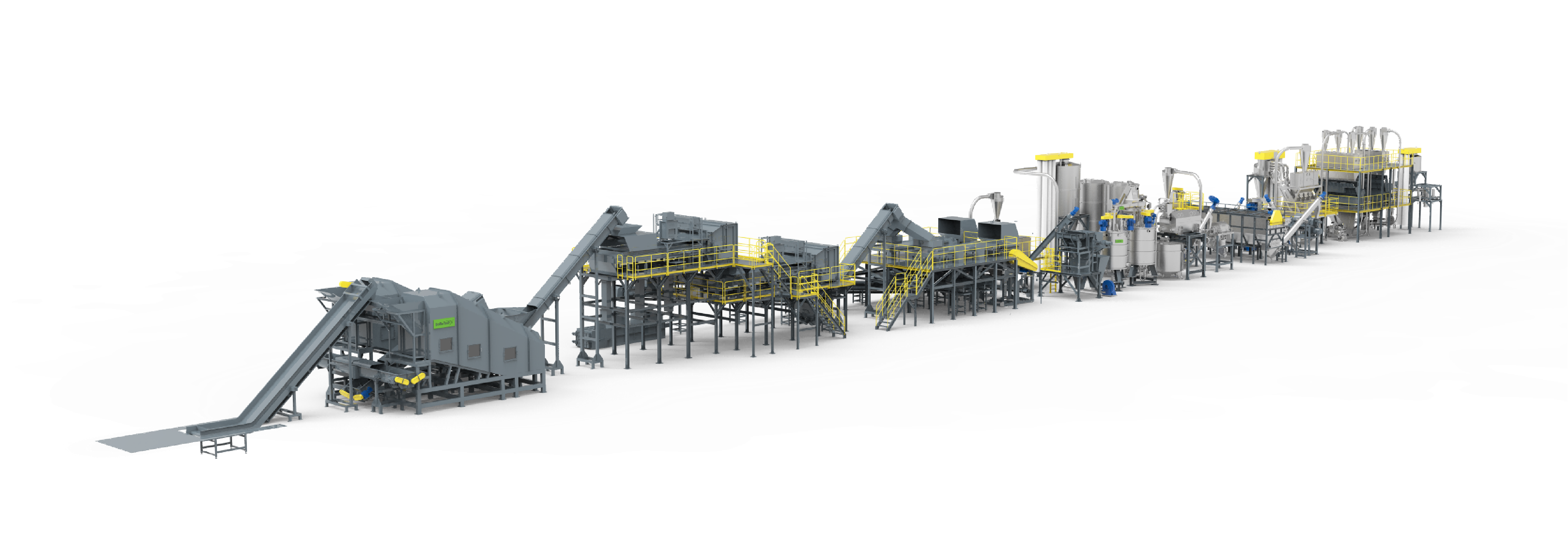
Integrated PP/PE Bottle Cap Recycling Solution
Bottle caps are a large and consistent source of PP and PE, but they can contain significant amounts of sugary beverage residues and label adhesives.
BoReTech takes an integrated whole-line approach, incorporating the collection and washing of bottle caps directly into the PET recycling process.
This design concept offers multiple advantages:
- Integration with existing PET lines: The system can be directly connected to an existing PET recycling line and share key equipment and infrastructure, avoiding duplicate investment and significantly improving equipment utilization.
- Compact integrated design: Optimized equipment integration makes better use of available space, allowing plants to generate more value within a limited footprint.
- Reduced labor requirements: Highly automated processing minimizes manual intervention. Typically, only two operators are required to manage the complete system, significantly improving operating efficiency.
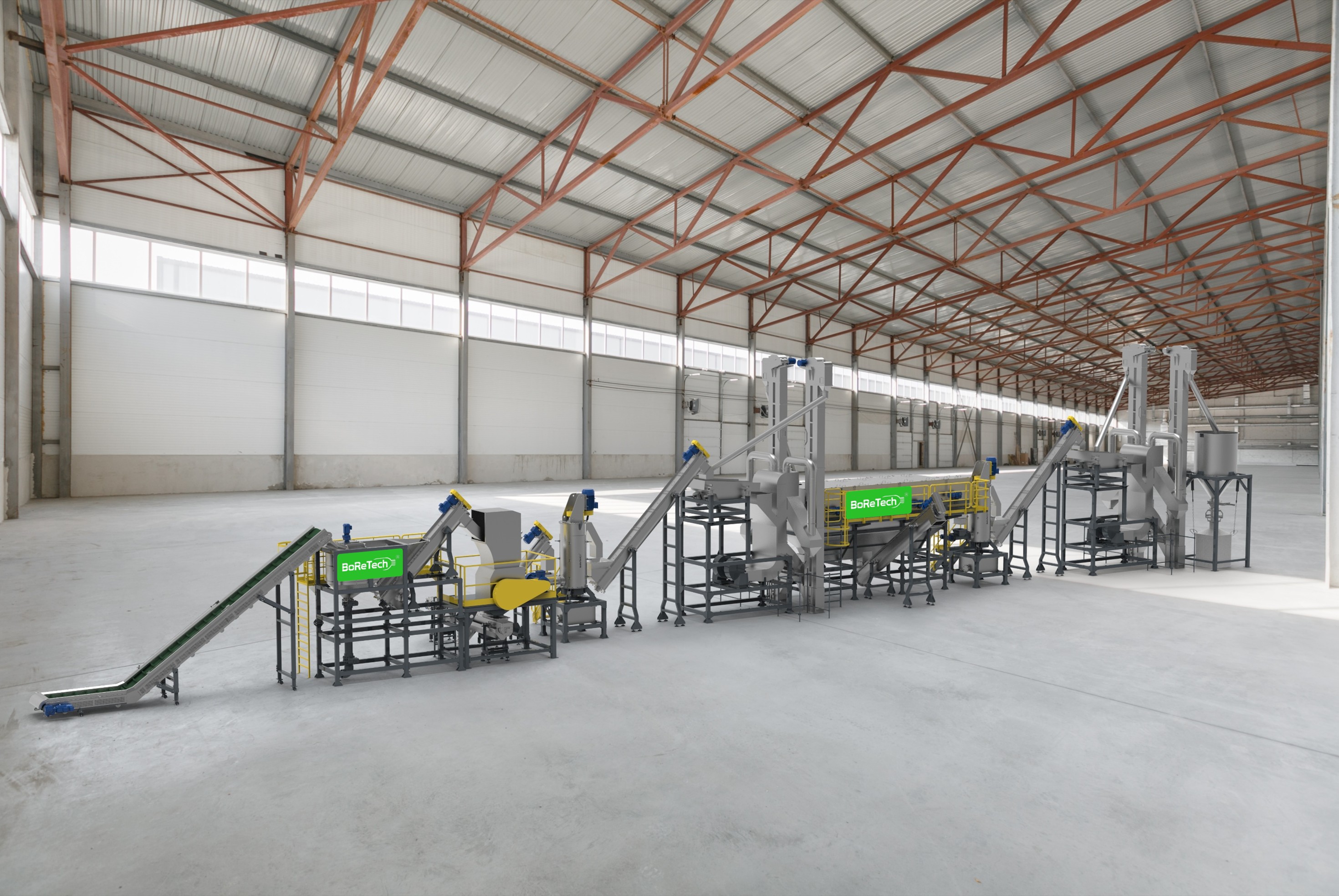
PP/PET Tray Washing System
Post-consumer PET/PP rigid trays are characterized by high compaction density, adhesive residues, and labels, creating greater challenges for sorting, size reduction, and washing.
Some post-consumer trays enter the recycling process in highly compressed bales and may carry substantial amounts of stubborn labels and adhesives on their surfaces. If an unsuitable size-reduction method is used, the material may generate excessive fines and lead to additional material losses.
BoReTech’s PET/PP tray recycling system addresses these challenges through an innovative de-baling and separation mechanism combined with a powerful hot-washing module. The system reduces fines generation and material losses while effectively removing adhesives and other stubborn contaminants.
The result is high-yield, clean output from waste streams that may not be economically viable for conventional recycling lines.
Frequently Asked Questions About PP Recycling
Can Woven Polypropylene Bags Be Recycled?
Yes. Woven PP bags used for rice, flour, sand, animal feed, and similar products can be recycled, but they require specialized processing.
Their fibrous structure can wrap around and damage conventional rigid-plastic shredders designed primarily for materials such as yogurt cups. Recycling facilities therefore need size-reduction and washing systems specifically configured for flexible woven materials.
What Is the Difference Between Recycling PP (#5) and PET (#1)?
The key differences are density, infrastructure maturity, and end markets.
PET is denser than water and sinks in a float-sink separation tank, while PP floats. PET also benefits from a mature global recycling infrastructure built over decades, whereas PP recycling infrastructure is still developing.
PET also has established food-grade recycling pathways, while producing food-contact-grade rPP is generally more challenging and costly.
Is Post-Consumer Recycled PP (rPP) Safe for Food-Contact Packaging?
Under the applicable regulatory framework and food-contact requirements, certain validated recycling processes can be used to produce food-contact-grade rPP.
Whether a specific rPP product is suitable depends on the recycling process, feedstock source, decontamination performance, and regulatory requirements in the target market.
Recycling facilities must demonstrate that their decontamination technology can reduce contaminants to levels that meet applicable safety thresholds. Because PP presents significant challenges in contamination control and decontamination, producing food-contact-grade rPP requires stringent feedstock control, effective sorting and washing, and high-performance decontamination technologies.
At present, validated mechanical, chemical, and solvent-based recycling pathways can be used to develop food-contact-grade rPP. The applicable route depends on the recycling technology, feedstock source, intended application, and regulatory approvals.
Why Is Recycled PP Sometimes More Expensive Than Virgin PP?
Virgin PP is produced at enormous scale from fossil-based feedstocks, supported by decades of investment in large-scale production infrastructure.
Producing high-quality rPP involves the real costs of collection, complex multi-stage sorting, hot washing, and stringent decontamination. Until regulations and market demand drive recycled-content requirements at sufficient scale, this cost difference is likely to remain.
Mechanical Recycling vs. Chemical Recycling & Solvent-based Recycling: Which Is Better for Sustainability?
They serve different purposes.
Mechanical recycling is generally more energy-efficient and has a lower carbon footprint per tonne processed, making it the primary route for non-food applications and large-scale PP recycling.
Chemical recycling and solvent-based recycling can require more energy, but they can provide a pathway to higher-purity, near-virgin-quality materials when mechanical recycling cannot adequately address certain feedstock or product requirements.
Rather than choosing one over the other, most advanced recycling strategies are likely to use both pathways in parallel, directing different waste streams to the most appropriate technology.
Ready to Upgrade Your PP Recycling Operation?
Whether you are processing bottle caps, rigid trays, or other PP waste streams, the key to achieving stable, high-quality recycled output is to design the sorting, washing, and downstream processes around the specific characteristics and contamination profile of the feedstock.
BoReTech provides comprehensive turnkey plastic recycling solutions tailored to specific feedstock compositions and capacity requirements.