


At loading docks, supermarkets, warehouses, and distribution centers, you have probably seen it piled up by the ton: stretch film, shrink film, plastic bags, agricultural film, bubble wrap, and more. Polyethylene (PE) film is one of the most widely used materials in global packaging, but it is also one of the more challenging waste streams to manage within conventional recycling systems. PE film recycling sits at the intersection of three growing pressures: enormous material volumes, complex processing and logistics, and rapidly tightening regulations.
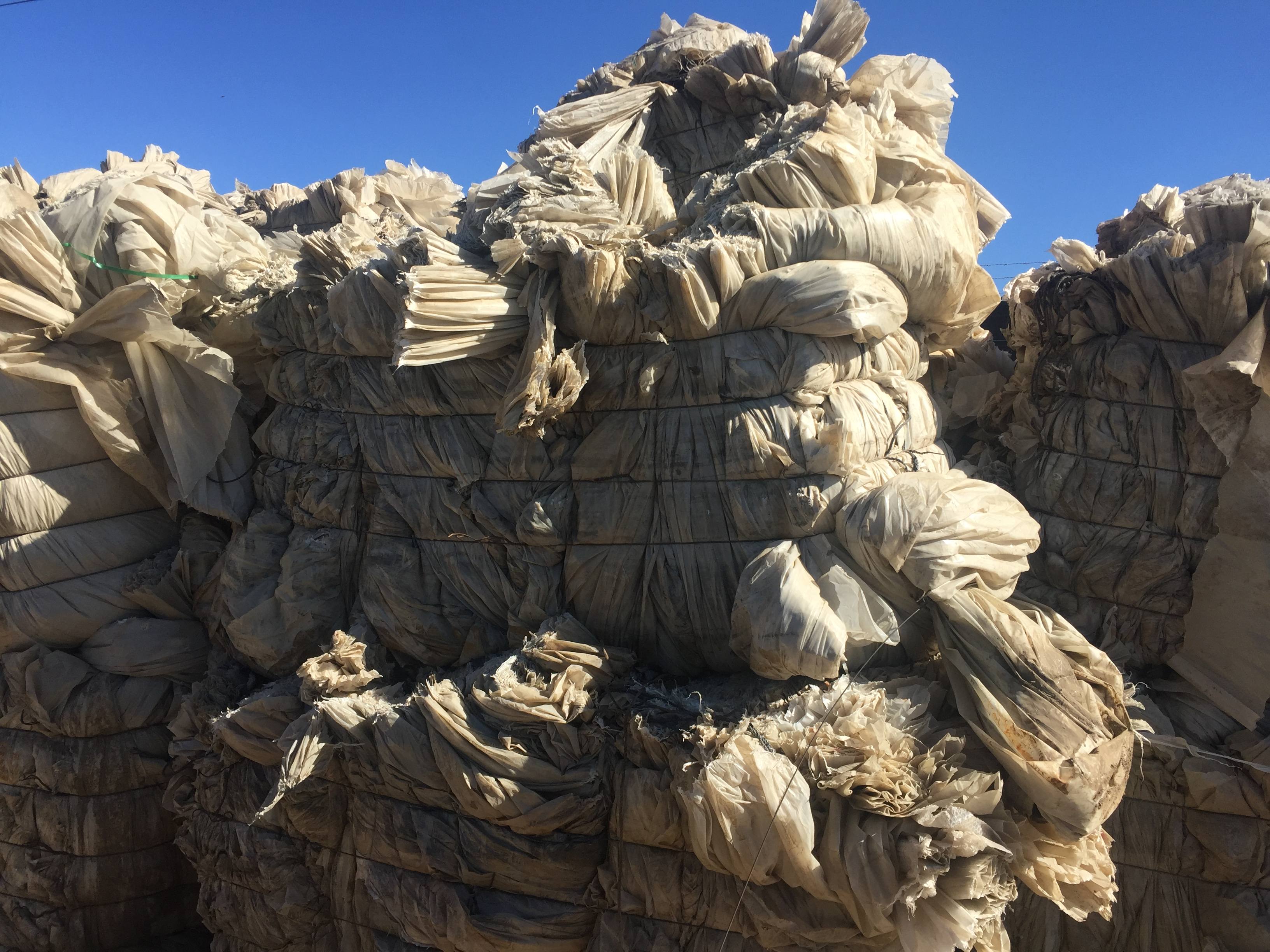
The challenge is not whether PE film can be recycled—it can. The challenge is that large volumes of post-consumer film still struggle to enter existing recycling systems. Film can wrap around sorting equipment, contaminate rigid-plastic streams, and is routinely rejected by curbside recycling programs that are not equipped to handle it. At the same time, as brands compete to meet recycled-content targets, demand for recycled polyethylene (rPE) continues to grow, creating a market gap that purpose-built industrial recycling technologies are increasingly well positioned to fill.
This guide explains what PE film is, why it is technically challenging to recycle, how an effective recycling process works, and what industrial solutions are available for facilities looking to process this increasingly important material stream.
What Is PE Film?
Polyethylene film is a thin, flexible plastic material made primarily from polyethylene resins. It is commonly produced from low-density polyethylene (LDPE, resin identification code #4) or linear low-density polyethylene (LLDPE) and manufactured through extrusion. Film thickness varies widely depending on the application, ranging from a few micrometers to several millimeters.
PE film appears in more forms than you might expect:
- Retail and supermarkets: shopping bags, produce bags, bread bags
- Industrial packaging: stretch film, shrink film, courier bags, bubble wrap
- Agriculture: greenhouse film, silage film, agricultural mulch film
- Construction: vapor barriers, moisture barriers, protective films
- Consumer products: dry-cleaning bags, resealable bags, frozen-food packaging
Why Does PE Film Need to Be Recycled?
Polyethylene is derived primarily from fossil-based feedstocks. Every tonne of PE film sent to landfill or incineration represents wasted material, wasted energy, and a missed opportunity to displace virgin plastic production. For heavily contaminated agricultural film, additional pre-treatment and contaminant-removal stages are often required to reduce the load on the main washing system. This means that even relatively small improvements in recovery rates can generate significant environmental and economic benefits at scale.
Beyond resource recovery, poorly managed PE film creates real operational problems. When mixed with rigid plastics, it can contaminate recyclable material streams and cause equipment blockages at material recovery facilities (MRFs). When improperly managed in the environment, fragmented plastic film can also contribute to microplastic pollution.
Can PE Film Be Recycled?
Yes. With the right equipment and process design, PE film can be recycled efficiently and at industrial scale.
In many applications, PE film is predominantly a single-polymer material, making its fundamental recycling chemistry relatively straightforward compared with multilayer structures. A well-designed PE film recycling line can produce clean LDPE/LLDPE regrind or pellets suitable for a wide range of applications and, depending on feedstock quality and processing technology, can partially replace virgin resin.
The key issue is that equipment design matters enormously. Conventional rigid-plastic recycling lines are not designed for flexible film. Film can wrap around shafts, clog screens, and behave very differently from bottles or rigid containers. Effective film recycling requires a system engineered around the physical characteristics of flexible plastics from the outset.
PE Film Recycling Process: From Sorting to Pelletizing
Mechanical Recycling
Mechanical recycling is currently the primary industrial recycling route for PE film. With appropriate engineering and process design, it can deliver stable output at commercial scale.
1. Collection and Baling
PE film is collected from post-consumer sources, such as retail collection programs and curbside or drop-off systems, as well as post-industrial sources, including warehouses, distribution centers, manufacturing operations, and agricultural sites. The material is typically baled for efficient transportation and handling.
2. Pre-Sorting
Bales are opened and the film is sorted by material type, color, and contamination level. Heavily contaminated agricultural film containing soil, stones, and organic matter may require additional pre-treatment, contaminant removal, and pre-washing to reduce the contamination load entering the main washing system.
3. Shredding and Size Reduction
The film is processed through shredding and size-reduction equipment to produce more manageable pieces for downstream processing. This is one of the most important areas of purpose-built film recycling engineering. Size-reduction equipment must be designed for the low bulk density and highly entangling nature of film to minimize wrapping and improve conveying and feeding stability.
4. Washing
The shredded material passes through high-speed washing, friction washing, and rinsing stages to remove food residues, dirt, and surface contaminants. Depending on the feedstock, additional hot washing may be introduced to deal with more difficult contaminants such as labels, adhesives, printing inks, and heavy oil contamination.
5. Sink-Float Separation
LDPE and LLDPE typically have densities below that of water and therefore float, allowing them to be separated from higher-density contaminants such as PET, as well as soil and other heavy materials. However, HDPE and PP also typically have densities below 1 g/cm³, so conventional sink-float separation alone cannot reliably distinguish them from LDPE/LLDPE.
6. Dewatering and Drying
The washed film is mechanically dewatered and then dried using friction-based and thermal drying systems. Excess moisture increases the venting load during extrusion and can lead to pellet foaming, surface defects, and reduced processing stability. Efficient dewatering and drying are therefore critical to successful film pelletizing.
7. Extrusion and Pelletizing
The clean, dry film is melted and homogenized in an extruder before being converted into uniform pellets. Depending on the feedstock and target application, additives may be introduced to improve melt performance, processing stability, or UV resistance.
Chemical Recycling
For certain PE film streams that are too heavily contaminated, compositionally complex, or otherwise unsuitable for efficient mechanical recycling, chemical recycling—primarily pyrolysis—can provide an alternative pathway.
Pyrolysis thermally breaks down PE into hydrocarbon products, including pyrolysis oil and other hydrocarbon fractions. After further refining and upgrading, these products can be used as chemical or petrochemical feedstocks and potentially as inputs for producing new polyethylene with properties comparable to virgin materials.
Chemical recycling generally requires higher energy consumption and capital investment than mechanical recycling. However, it can provide an additional pathway for certain feedstocks that are difficult to process efficiently through conventional mechanical recycling, including some heavily contaminated or complex materials. Strict feedstock selection and pre-treatment remain important.
These two approaches should not necessarily be viewed as competing technologies. Rather, they can address different parts of the feedstock quality spectrum, depending on contamination levels, material composition, and the required output quality.
The rPE Market: End-Use Applications and Global Regulations
Recycled LDPE and LLDPE already have established applications across a wide range of markets. As recycled-content requirements increasingly influence brand procurement strategies, demand for high-quality rPE is expected to continue growing.
Common applications include:
- New plastic bags and film packaging
- Bin liners and garbage bags
- Agricultural films and irrigation pipes
- Construction films and vapor/moisture barriers
- Wood-plastic composites and outdoor decking
- Drainage pipes and conduit
For high-purity rPE that meets the required specifications, film-to-film recycling is one of the higher-value applications. Clean recycled PE can potentially replace virgin resin in new film and packaging applications. Achieving this requires a high level of output purity, which is why washing performance is one of the most important variables in any PE film recycling investment.
How Regulations Are Reshaping the Market
Regulatory pressure is accelerating investment in PE film collection and recycling infrastructure, often faster than market forces alone would. Several policy mechanisms are already changing the economics of collection and processing.
Extended Producer Responsibility (EPR)
EPR regulations in major markets around the world are increasingly requiring producers to take greater financial and/or operational responsibility for the end-of-life management of packaging they place on the market. These systems can shift more waste-management costs toward packaging producers while providing more stable funding for collection, sorting, and recycling infrastructure.
Single-Use Plastic Restrictions
In many markets, restrictions on single-use shopping bags are accelerating the transition toward thicker, nominally reusable bags. These bags can have different collection and recycling economics and, in some cases, may be more suitable for recovery systems.
Mandatory Recycled-Content Requirements
The EU Packaging and Packaging Waste Regulation (PPWR), together with similar legislation in the UK, Canada, and several U.S. states, is establishing or increasing recycled-content requirements for certain packaging applications. These policies are expected to support long-term demand for high-quality rPE as brands seek compliant recycled feedstocks.
Retail Take-Back Programs
Large retailers across Europe and North America are increasingly operating in-store film take-back programs. These schemes provide an additional collection channel outside municipal curbside systems and can create a more consistent supply of post-consumer film feedstock.
The direction is clear: as regulatory requirements continue to tighten, facilities that invest in PE film processing capacity today may be better positioned to capture a growing material stream supported by policy, brand commitments, and increasing demand for recycled content.
Is Your Facility Processing PE Film?
The contamination and logistics challenges associated with PE film require equipment specifically designed for flexible plastics—not a modified bottle-washing line.
BoReTech develops PE film recycling systems for both post-consumer and post-industrial film streams.
See: BoReTech Flexible Film Recycling Solutions
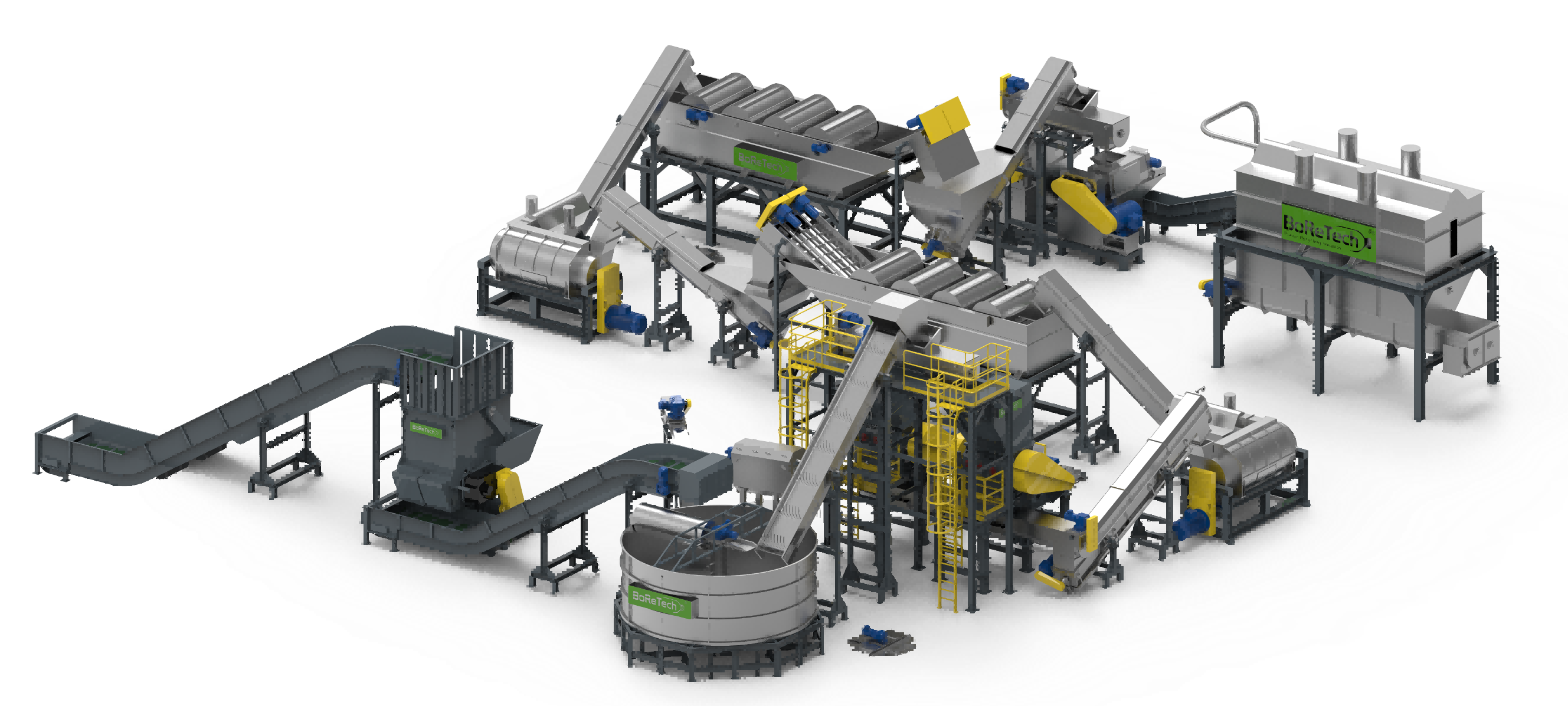
In PE film recycling, the gap between being technically recyclable and being operationally viable often comes down to equipment and process design. Systems designed for rigid plastics can experience film wrapping, unstable feeding, insufficient washing, and inadequate dewatering when processing flexible materials.
BoReTech's engineering approach starts with the physical characteristics of the film itself and uses different process modules to meet the requirements of different feedstocks.
Core Modules: The Essential PE Film Recycling Processes
BoReTech's core modules are designed for both post-consumer and post-industrial film streams.
Shredding Module
Designed for film with irregular dimensions, high volume, and a strong tendency to wrap, the shredding module reduces the material to a more manageable size for downstream processing, improving conveying and feeding stability.
Pre-Washing and Size-Reduction Module
High-speed pre-washing removes a portion of the solid contaminants before the material is conveyed with water to the size-reduction stage for wet cutting and friction washing. The resulting material-water mixture then enters a friction dewatering system for further cleaning and contaminant separation.
Washing & Sludge Discharge Module
Fully automatic timed sludge discharge combined with a self-circulating water pump ensures smooth material flow without accumulation or blockage, significantly improving washing efficiency.
Dewatering & Squeezing Module
Semi-plasticizing squeeze-drying technology precisely controls moisture content without requiring hot-air drying, producing consistently dry output.
Optional Modules: Additional Treatment for Specific Contaminants
Film feedstocks can vary significantly in contamination level. BoReTech therefore uses a combination of core and optional modules to customize each system according to the specific material stream.
Dry Contaminant Removal Module
For agricultural film containing large amounts of soil and solid contaminants, dry pre-cleaning can remove a significant portion of the solid contamination without using water, reducing the contaminant load entering the washing system.
Hot Washing Module
For more difficult contaminants such as labels, adhesives, printing inks, and heavy oil residues, a hot-washing stage can be added to enhance cleaning performance and reduce the impact of residual contaminants on downstream pelletizing and recycled-product quality.
This core-module + optional-module approach allows systems to be configured for different feedstocks, including PE agricultural film, PE industrial film, post-consumer and packaging film, heavy-duty packaging film, and PP woven bags, rather than applying one fixed process to every flexible-plastic stream.
For facilities evaluating investment in PE film recycling capacity, the key questions remain the same: What is the feedstock composition? How contaminated is it? And what output specification is required? These factors determine the appropriate system configuration.
Frequently Asked Questions About PE Film Recycling
What Types of PE Film Can Actually Be Recycled?
Most clean and relatively dry LDPE and LLDPE films can be recycled through an appropriate industrial recycling system. Examples include shopping bags, produce bags, bread bags, dry-cleaning bags, bubble wrap, stretch film, and similar mono-material films.
Multilayer films—for example, structures incorporating aluminum foil, nylon, or PET to improve barrier performance—are significantly more difficult to mechanically recycle because the individual layers cannot be cleanly separated.
Agricultural film can also be recycled, but it typically requires dedicated pre-cleaning to remove soil, organic matter, and other contaminants.
Why Can't PE Film Go Into the Curbside Recycling Bin?
There is a straightforward mechanical reason why many curbside recycling programs do not accept PE film: it can wrap around rotating shafts, belts, and screens inside material recovery facilities (MRFs), causing equipment blockages, downtime, and costly maintenance.
Most MRFs are designed primarily around rigid containers and are not equipped to safely process flexible film. This is fundamentally an infrastructure limitation rather than a limitation of the material itself. A dedicated PE film recycling line can be engineered specifically to handle these characteristics.
Where Should Businesses and Consumers Take PE Film for Recycling?
Businesses generating post-industrial film, such as stretch film, shrink film, and manufacturing scrap, can often work directly with recyclers that accept clean industrial film streams. Depending on the material quality and local market conditions, such material may be accepted at little or no cost and may even have positive market value.
Consumers can use retail take-back programs where available. Many major supermarkets and retailers operate dedicated collection points for clean, dry plastic bags and film.
In the U.S., the How2Recycle Store Drop-Off label can help consumers determine whether specific plastic bags and films are eligible for store-based recycling collection.
Ready to Build a Profitable PE Film Recycling Line?
Driven by EPR regulations, retail take-back programs, and brand commitments to recycled content, PE film is becoming an increasingly important recycling feedstock.
BoReTech's flexible film recycling systems are designed to transform challenging PE film streams into stable, high-quality rPE feedstock.
Talk to BoReTech's engineers about your feedstock, contamination level, and target product requirements: Contact BoReTech now.